势不可挡
American teacher takes jar of sand as symbol of shared ground in forest he helped grow in China_我的网站

一 | 抚顺市委、市政府高度重视黑土地保护利用工作,统筹推进生态安全、粮食安全与农业品牌,坚持强化耕地质量、数量、生态“三位一体”目标,深入实施“藏粮于地、藏粮于技”战略,严守耕地红线,聚焦黑土耕地质量提升,多措并举切实保护好黑土地这个“耕地中的大熊猫”。 为响应国家实施东北黑土地保护和合理利用的决策部署,我市积极开展黑土地保护性耕作,进一步改善和修复全市农业生态环境,促进节本增效,努力实现全市农业绿色可持续发展。

二 | 日前,抚顺县东鑫农机专业联合社种植的500亩玉米喜获丰收。
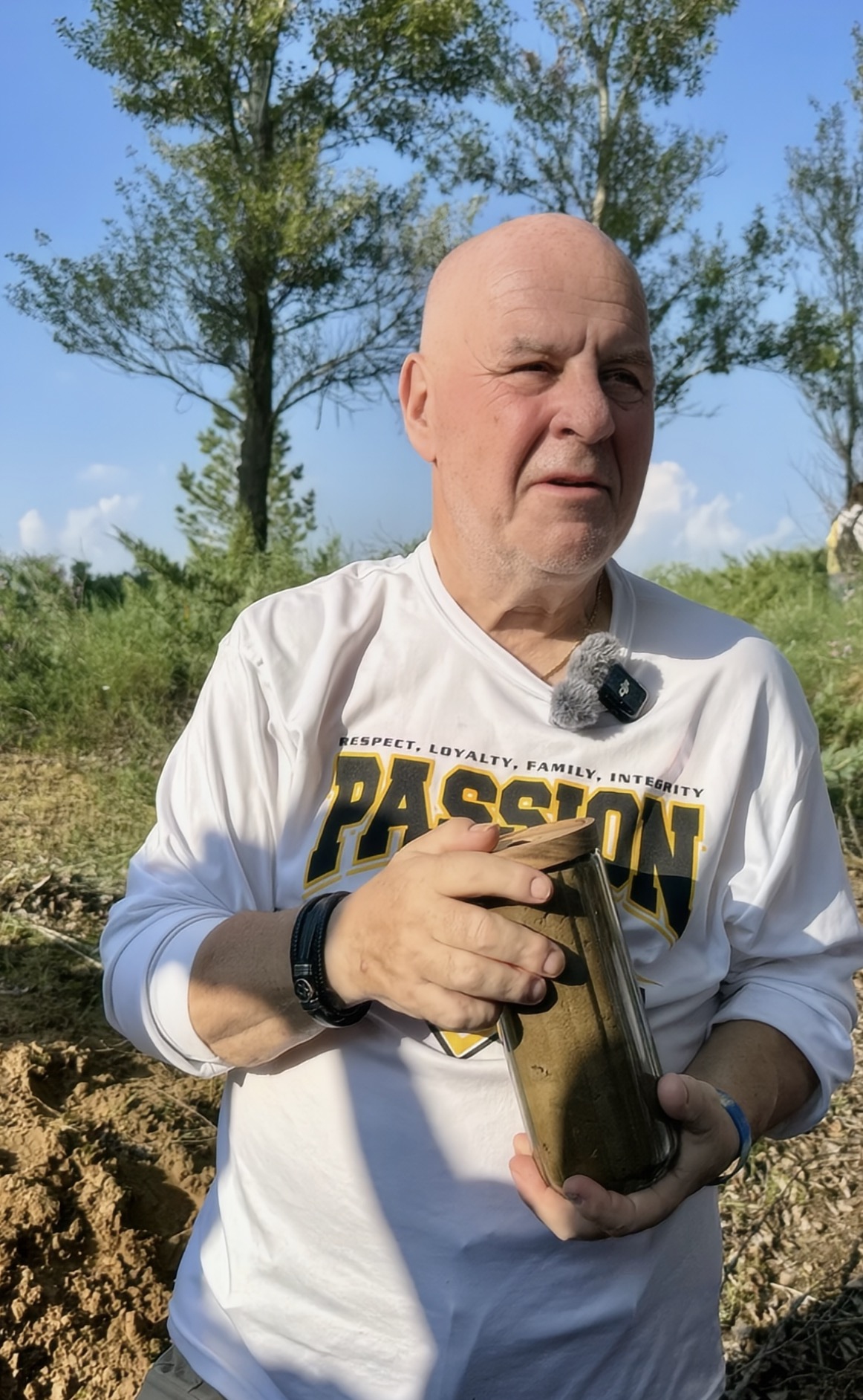
On Monday afternoon, Ronald Sakolsky, an American teacher, set foot once again on the soil of the Mu Us Desert, in the Uxin Banner of Ordos, North China’s Inner Mongolia Autonomous Region. He first came here in 2000. Back then, the land was little more than drifting sand. Today, it is green with trees – a transformation driven by decades of local effort.
He stood within Sakolsky Forest, a woodland formally named to honor his early donation toward local ecological restoration. There, he carried out a plan he had held long before this trip: filling a jar with sand from the desert to bring home to the US.
More than two decades ago, sand was the one thing this place had in abundance. In 1999, when Sakolsky arrived in China as a participant in a bilateral teacher exchange program, he was moved by the tireless efforts of Chinese desert fighter Yin Yuzhen and her husband to curb desertification in the Mu Us Desert. He raised $5,000 – equivalent in 1999 to three years of income for Yin’s entire family – to fund their local tree-planting initiative.
The young saplings bought with that donation have since matured into more than 50,000 full-grown trees, transforming the once desolate, sandy wasteland into a thriving green landscape.
When Sakolsky met Yin at the airport on Sunday, 26 years after his first visit to Inner Mongolia, he joked that he could not take a tree from the Mu Us Desert, but he could slip some sand into his shoes and carry a piece of the land back with him. Now, he had found exactly the sand he wanted – not just any sand, but from a place where persistence had turned desert into life, and where his own name had become part of that story.
“Promise is a promise,” he said. “Ms. Yin made a promise, and she fulfilled it.”
For Sakolsky, the sand is not just dirt. It is a metaphor, a bridge, a shared ground. He plans to tell his grandchildren what it means. “It’s not just a piece of sand in the jar,” he said. “It’s a jar of love.”
He used the jar of sand to symbolize that America and China share a relationship rooted in the same soil. He shook the jar, holding its two ends as if they were the two countries, and said that it shows we’re all on the same planet.
There is an old American joke, he noted, that if you dig a hole deep enough, you will eventually reach China. “We’re all on the same planet,” he said.
Earlier that day, while visiting Yin’s home, he spoke about the need for Americans and Chinese to see each other as family. “All Americans should understand that Chinese people and Americans can be family,” he said. “We can transcend differences if we focus on our common ground. We all love our countries, and we all value loyalty and respect – these are the shared virtues we hold dear.”
As for the sand he collected, Sakolsky said he would treat it as a treasure, alongside all his other precious keepsakes from China. He expects to display it in his living room – a daily reminder of the forest that carries his name and the people who made it grow.
。由于采取秸秆覆盖保护性耕作方式,土地更加肥沃,今年亩产玉米约1600斤,比采取普通耕作方式时亩产量增加100斤。 保护性耕作技术是近年来积极推行的一种新型耕作技术,是对农田实行免耕、少耕,用作物秸秆覆盖地表,减少风蚀水蚀,提高土壤肥力和抗旱能力的先进耕作技术,不仅可以稳定粮食产量、减少化肥使用,还可以降低生产成本,保护生态环境,经济效益、社会效益和生态效益非常明显,是推进农业可持续发展的有效途径。我市积极贯彻落实国家黑土地保护工程,旨在通过政府与市场两端发力,科技支撑与主体培育并重,重点突破与整体推进并举,稳产丰产与节本增效兼顾,技术创新与机制创新并行,在我市适宜区域稳步有序扩大实施面积,持续增强黑土地保护效果,促进农业可持续发展。

三 | 据了解,今年,我市保护性耕作任务4万亩。

四 | 建设高标准保护性耕作县级应用基地4个、乡级应用基地5个、村级应用基地18个。

五 | 以玉米为重点,兼顾大豆、杂粮、杂豆、油菜、麦类、花生等作物,在全市适宜区域大力推进实施保护性耕作,各县区也有序扩大保护性耕作实施面积,逐步提升作业质量。 为了更好地完成此项国家战略任务,今年年初以来,我市农业农村部门积极组织专家参与了《抚顺市黑土地保护性耕作实施方案》的制定和乡级高标准保护性耕作基地材料的审核工作,通过现场技术指导、召开培训座谈会、送农机科技下乡、典型示范引路等形式,以点带面,大力推动保护性耕作技术推广和实施。 今年,我市还进一步加大保护性耕作宣传推广力度,让越来越多农民了解保护性耕作技术的优势,认识到实施保护性耕作的重要意义。此外,在春季玉米播种期间,市农业农村部门还组织专家组成员深入到乡镇村屯田间地头指导农机户进行免耕播种机维护保养、作业数据调试和适合保护性模式选择等工作,解决种植户在实施保护性耕作过程中遇到的困难和问题。 我市农业农村部门还通过多种渠道持续深入开展科普宣传和政策宣讲,做到实施区域全覆盖,促进技术和政策进村入户,进一步激发调动广大基层干部和农民群众开展保护性耕作的积极性和主动性。

六 | 此外,进一步强化跟踪指导服务,提升作业质量,确保播种质量,使保护性耕作在我市扎深根、结硕果。 责任编辑:李丹。
Current article:http://r1o.cousizhegaobaolengkuo.bond/list_bc51sd/cwu36t.html
Published on:07:36:05


